

Air Quality Testing Services in Abu Ali
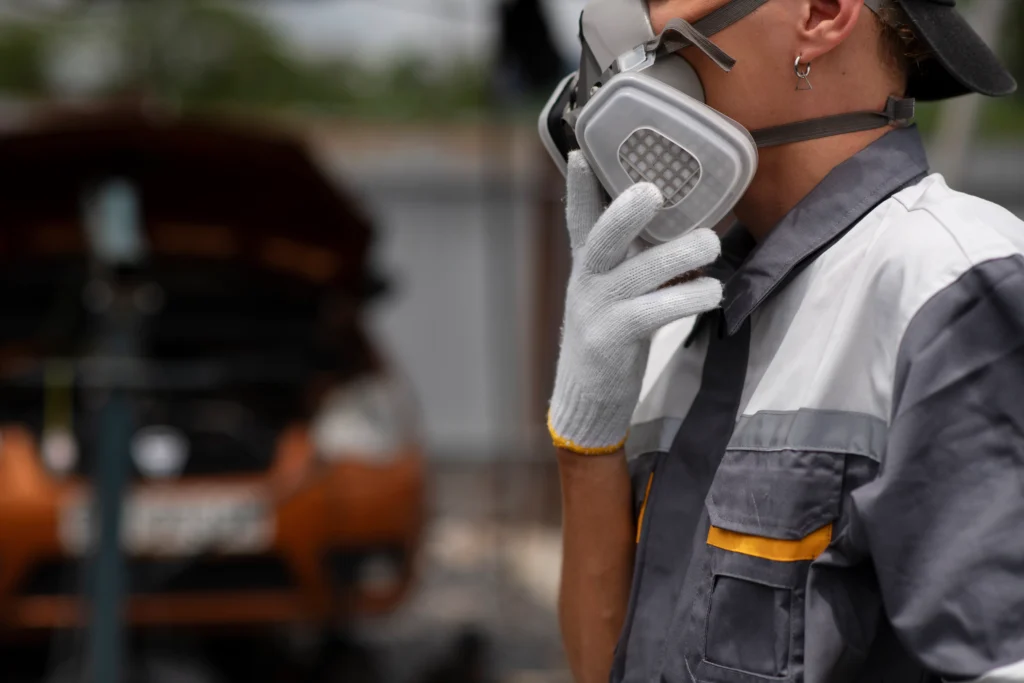
Air quality testing companies in Abu Ali are involved in evaluating air conditions across industrial, commercial, and environmental settings to determine the presence of pollutants and airborne contaminants. In areas with active industrial operations and infrastructure development, monitoring air quality is necessary to maintain environmental standards and workplace conditions.
Air testing focuses on identifying particulate matter, gases, and chemical pollutants that may affect operational environments or human exposure levels. These assessments help detect risks early and support compliance with environmental requirements.
Testing activities are carried out using calibrated monitoring equipment, supported by Calibration Service to ensure measurement accuracy and consistent data collection.
What is Measured in Air Quality Testing
Air quality analysis involves measuring multiple parameters depending on the application. This includes particulate matter (PM), carbon monoxide, sulfur dioxide, nitrogen oxides, and volatile organic compounds.
Monitoring may be conducted over specific time intervals to evaluate exposure levels and identify fluctuations in air conditions. Each parameter provides insight into environmental quality and potential risks.
Accurate measurement depends on stable instrumentation, with systems maintained through Calibration Services to ensure reliable monitoring results.
Applications in Abu Ali
Air quality testing is widely used in Abu Ali across industrial zones, construction sites, and operational facilities. Industrial environments require monitoring to manage emissions and maintain compliance with environmental standards.
Construction activities often require air monitoring to assess dust levels and worker exposure conditions. Commercial and enclosed environments may also require testing to maintain indoor air quality.
These applications depend on consistent measurement practices supported by Calibration Service to ensure dependable results.
Testing Approach and Monitoring Process
Air testing is conducted using monitoring devices placed in controlled or operational environments to capture real-time or sample-based data. Measurements are recorded over defined intervals and analyzed to determine pollutant levels.
The collected data is evaluated against acceptable limits to identify deviations or potential risks. Monitoring conditions, equipment positioning, and environmental factors are considered during analysis to ensure accuracy.
Instrument reliability is maintained through calibration practices to support consistent performance across testing activities.
Regulatory Context in Saudi Arabia
Air quality testing in Saudi Arabia is carried out within regulatory frameworks that define acceptable environmental limits and monitoring practices. These frameworks are recognized by the Saudi Standards, Metrology and Quality Organization (SASO) and the Saudi Accreditation Center (SAC).
In Abu Ali, monitoring activities are often required for industrial operations, environmental assessments, and compliance verification. Meeting these requirements ensures that air conditions remain within acceptable limits.
Measurement traceability is supported through calibration systems aligned with ISO/IEC 17025.
Reporting and Data Interpretation
Air quality testing results are documented in structured reports that include measurement data, testing conditions, and analysis outcomes. These reports are used for compliance verification, environmental monitoring, and operational assessment.
Reliable reporting depends on accurate data collection and validated measurement systems. Organizations that maintain traceable processes are better positioned to meet regulatory expectations.
Integration with Calibration Services supports consistency in monitoring and reporting.
Why Air Quality Testing is Important in Abu Ali
Air quality directly affects environmental conditions, worker safety, and operational performance. In Abu Ali, where industrial and construction activities are present, monitoring air conditions is necessary to maintain compliance and reduce environmental impact.
Regular testing helps identify changes in air quality and supports corrective actions before issues escalate.
Frequently Asked Questions
What is air quality testing used for?
Air quality testing is used to measure pollutants and airborne particles to assess environmental conditions and exposure levels.
What parameters are measured in air testing?
Parameters include particulate matter, gases such as carbon monoxide and nitrogen oxides, and volatile organic compounds.
Why is air quality testing important in Abu Ali?
It helps maintain environmental compliance and ensures safe working conditions in industrial and construction areas.
How is air testing conducted?
Monitoring devices are used to collect air samples or real-time data, which is then analyzed to determine pollutant levels.
How is accuracy ensured in air testing?
Accuracy is maintained through calibrated monitoring equipment and controlled testing procedures.
